

What Is Tofu Face? Korean Face Types and Ideal Types Explained
What is a tofu face in Korea? Explore Korean face types, from tofu and bear to dinosaur and Arab-type faces, and learn how Koreans describe their ideal types!
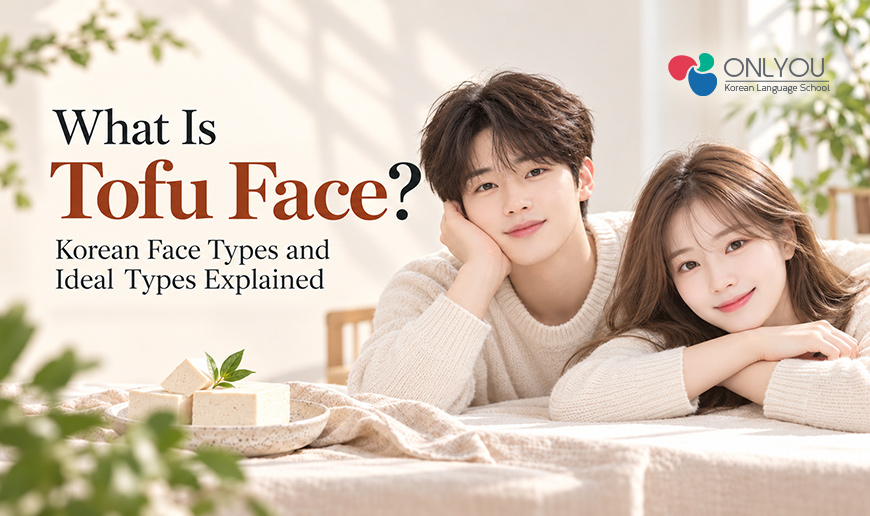
Have you ever heard someone describe their ideal partner as having a tofu face?
Yes, tofu! The same soft, white tofu you might enjoy in a bowl of Korean sundubujjigae (순두부찌개).
If you enjoy Korean dating shows or follow K-pop celebrities, you may have come across some rather unusual descriptions of people’s appearances. In Korea, someone might be described as having a puppy face, a cat face or even a tofu face!
But what do these expressions actually mean? And why do they come up when Koreans talk about their ideal partners?
Let’s find out!
두부상 (dubusang) literally means tofu face.
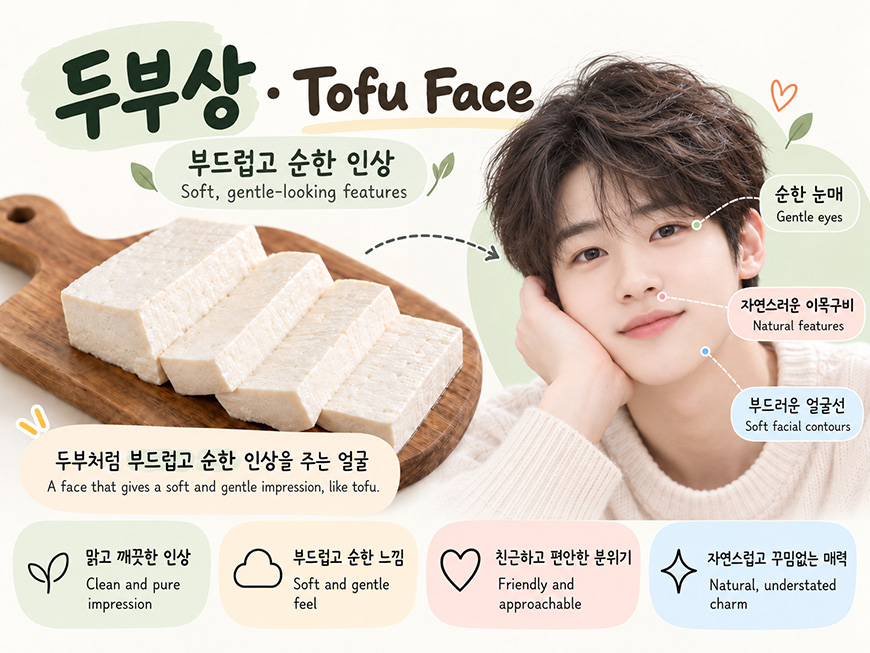
It’s an informal Korean expression used to describe someone with a soft, gentle and clean-looking appearance rather than sharp, strongly defined features. Think of the smooth, soft impression associated with tofu.
And yes, it’s generally meant as a compliment!
South Korean actor Choi Woo shik (최우식) is one celebrity often associated with this look.
Interestingly, Korean media reported in May 2026 that female members of a matchmaking company were showing increasing interest in men with soft, clean-looking tofu-face features.
Does that mean tofu faces are everyone’s ideal type? Of course not! Personal preferences vary, and a single report doesn’t represent what all Koreans find attractive.
Still, it shows how a food-inspired expression can become part of everyday conversations about appearance.
Tofu isn’t the only surprising comparison you’ll hear in Korean. Here are three more expressions worth knowing!
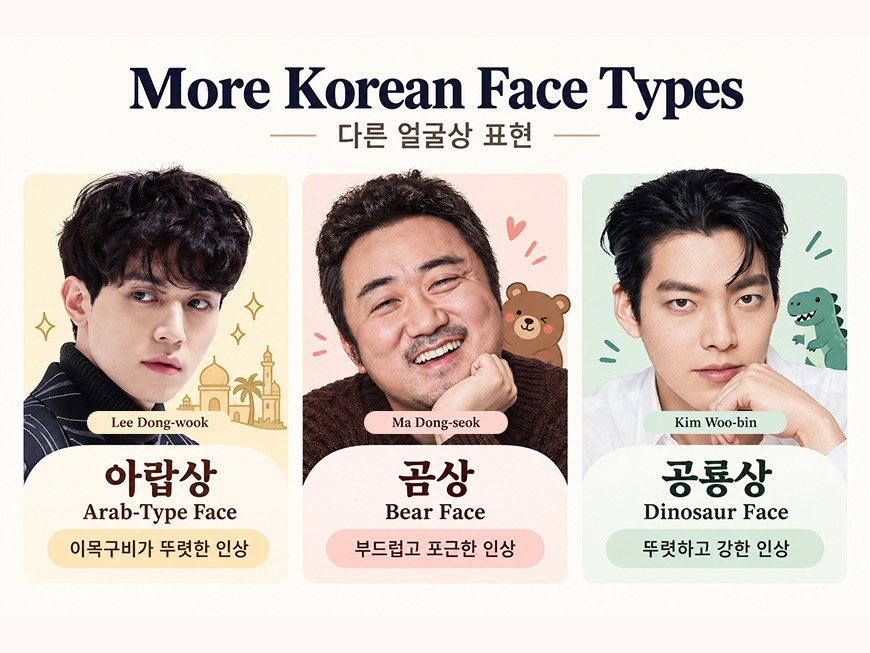
아랍상 (arapsang) — Arab-Type Face
Unlike the soft impression associated with 두부상, 아랍상 describes someone with striking, well-defined facial features, such as prominent eyebrows, expressive eyes and strong facial contours.
The term is often used in Korean online conversations as a contrast to tofu face, especially when people discuss their ideal types.
Although the name refers to Arabs, it’s an informal Korean appearance label based on a perceived look, not an accurate description of Arab people’s diverse appearances.
For a deeper look at Korean face-type expressions and beauty culture, read The Korea Times’ article “Do you have a K-face?”
🐻 곰상 (gomsang) — Bear Face
A broad or softly rounded face with a warm, approachable impression.
Despite the name, someone described as 곰상 doesn’t necessarily look fierce like a real bear!
🦖 공룡상 (gongnyongsang) — Dinosaur Face
A dinosaur face? Really?
This playful expression is often associated with strong bone structure, often featuring a longer or angular face shape, a defined jawline and distinctive facial features.
Quick Korean tip: The ending -상 (相) refers to a person’s appearance or facial impression in these expressions.
Curious about other face types? Explore our Animal Face Types: How Koreans Describe Faces with Animals and discover puppy, cat, rabbit, deer and desert fox faces!
Have you watched Netflix’s Korean dating reality show The Love Lab?
The programme explores attraction through unusual dating experiments. It raises an interesting question: Would you still fall for someone who isn’t your usual type?
In Korean, 이상형 (isanghyeong) means ideal type — the kind of person someone finds attractive or imagines as an ideal partner.
Let’s learn how you might talk about your ideal type in Korean!

Polite conversation — Someone you’re not close to
When speaking to someone you’ve just met or aren’t particularly close to, the polite -요 style is a safe, natural choice.
A: 이상형이 뭐예요?
Isanghyeongi mwoyeyo?
What’s your ideal type?
B: 저는 두부상 좋아해요.
Jeoneun dubusang joahaeyo.
I like the tofu-face look.
Both sentences sound natural in an everyday polite conversation.
Casual conversation — With a close friend
With a close friend of a similar age, you can use informal speech instead.
A: 넌 어떤 스타일 좋아해?
Neon eotteon seutail joahae?
What kind of person are you into?
B: 난 두부상 좋아해!
Nan dubusang joahae!
I like the tofu-face look!
And if you spot someone who fits your ideal type, you might say:
완전 내 스타일이야!
Wanjeon nae seutairiya!
They’re totally my type!
Little language tip: Notice how 좋아해요 becomes 좋아해 in casual speech. The meaning stays the same, but the level of politeness changes.
Generally, yes! 두부상 often suggests someone has a gentle, fresh-faced and approachable appearance.
But Korean face types aren’t official categories. They’re informal, subjective ways of describing someone’s appearance.
Someone might even be described as both a puppy face and a tofu face, depending on who’s looking at them.
And not every comparison is automatically flattering. Certain food-inspired expressions, such as 감자상, can sound teasing depending on the relationship and context.
So, while these expressions are fun to recognise in Korean entertainment, it’s worth being thoughtful when using them to describe someone in person!
Tofu, bear, dinosaur or a more striking look such as 아랍상 — which description surprised you the most?
Perhaps your favourite K-drama actor fits one of these descriptions, or you’ve just learnt a new expression to listen out for during your next Korean dating show.
That’s part of what makes learning Korean so enjoyable. Even playful expressions can reveal something interesting about the language and culture.
And the next time someone asks you 이상형이 뭐예요?, you’ll know what they mean!
Learn Korean Through Language and Culture
From 두부상 (tofu face) to 이상형 (ideal type), Korean is full of expressions that make K-dramas, dating shows and everyday conversations even more interesting!
Want to understand these expressions and use them naturally? At ONLYOU Korean Language School, our Korean classes in Singapore help you learn Korean while discovering the culture behind everyday conversations.
Just getting started? Explore our Foundation Korean lessons for beginners and begin your learning journey with us!