

Korean Food by Region: 9 Famous Local
Foods to Try Around Korea
Take a food trip around Korea and discover 9 famous regional dishes, what makes each one
special, and the local stories behind them.
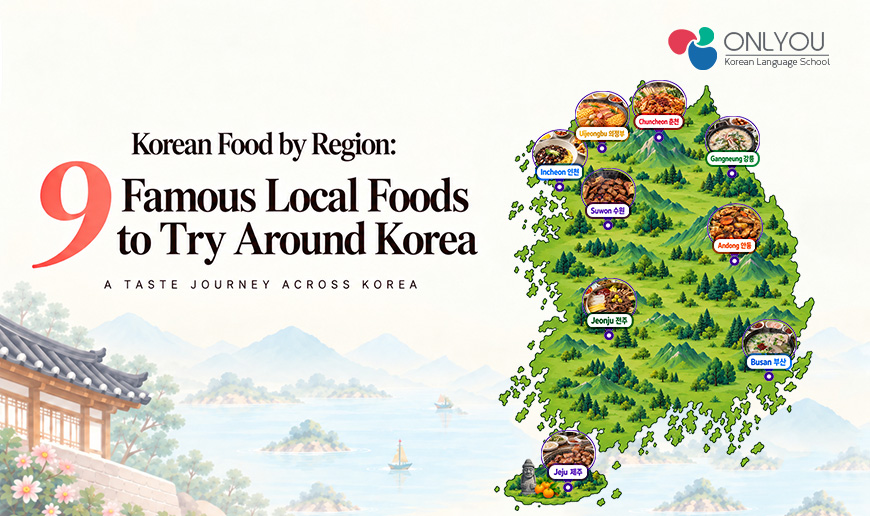
When you think of Korean food, what comes to mind?
Kimchi? Korean BBQ? Tteokbokki? 🍚🥢
They may be some of the best-known Korean foods overseas, but travel around Korea and you’ll quickly discover that different cities have their own local favourites.
Some developed because of the ingredients available in the region. Others have stories connected to local markets, history or even Korea’s changing way of life.
So, let’s take a food trip around Korea!
Here are 9 famous Korean foods from different regions and the stories behind them.
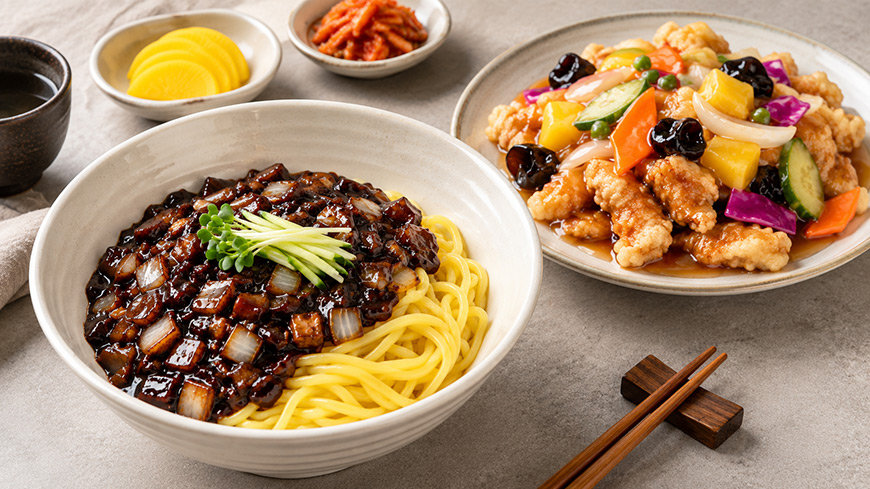
Black Bean Sauce Noodles
Jjajangmyeon is now eaten all over Korea, but did you know its Korean story is closely connected to Incheon?
After Incheon Port opened in 1883, Chinese immigrants settled around the port area and brought Chinese-style noodles with fermented bean sauce.
Over time, the dish changed to suit Korean tastes and developed into the dark, slightly sweet and savoury jjajangmyeon Koreans know today.
A bowl usually comes with noodles covered in a thick black bean sauce containing diced pork, onions and other vegetables.
🍜 How do Koreans eat it?
Mix everything together until the noodles are completely coated in the black sauce.
And if you’re eating with friends, you’ll often see another favourite on the table:
짜장면 + 탕수육
Jjajangmyeon + tangsuyuk (sweet and sour pork)
It’s a classic combination!
Army Stew
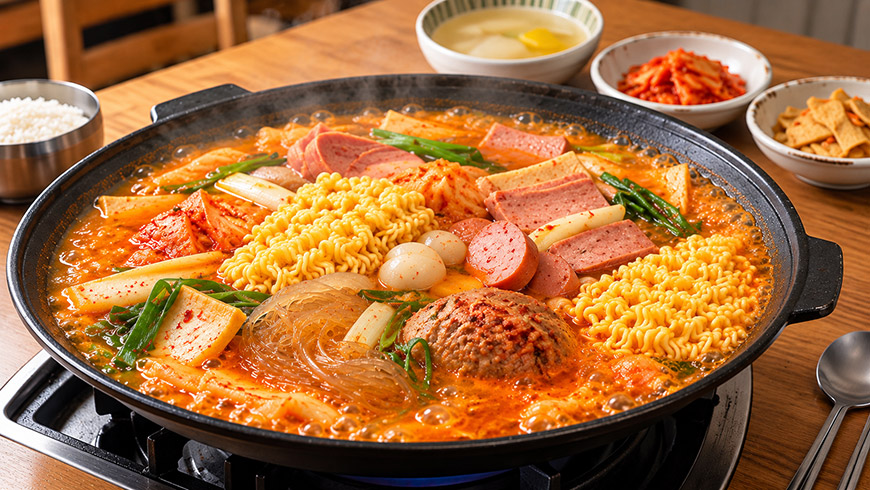
Spam, sausages, kimchi and Korean chilli seasoning all bubbling together in one pot.
Budaejjigae may look like an unusual combination, but its ingredients tell part of Korea’s modern history.
The dish became associated with Uijeongbu, an area with a strong U.S. military presence after the Korean War. Ingredients such as ham and sausages from around American military bases were combined with familiar Korean ingredients such as kimchi.
The result was a completely new kind of Korean stew.
Today, budaejjigae can include sausages, Spam, kimchi, tofu, beans, glass noodles and ramyeon.
🍜 Make it even better
Ramyeon is a popular addition.
Put the noodles into the bubbling broth and let them absorb all that spicy, savoury flavour.
One pot is also perfect for sharing, making budaejjigae a great group meal.
If ramyeon is one of your favourite Korean foods, you can also read our ONLYOU article on why Koreans love ramyeon.
Jumbo Beef Ribs
If you love Korean BBQ, remember this city:
Suwon = 수원 왕갈비 🔥🥩
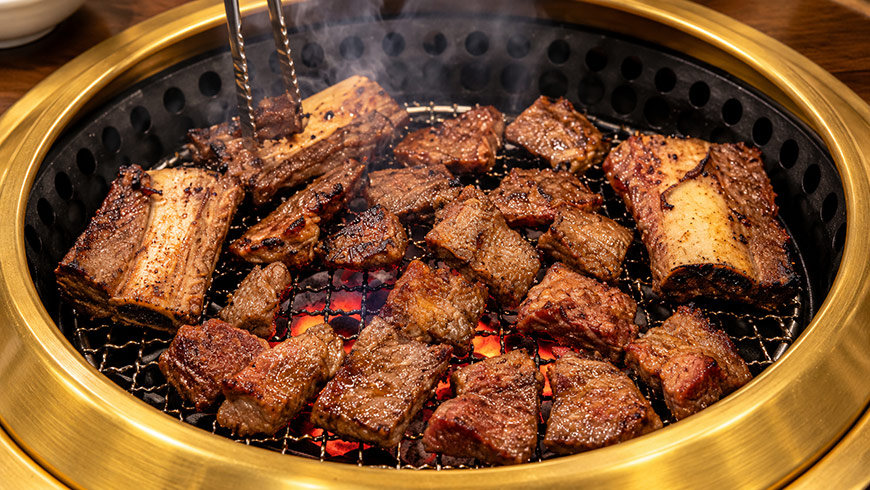
Suwon became famous for its large beef ribs, known as wanggalbi, literally “king-sized ribs.”
The city’s galbi tradition developed around the old Suwon cattle market. A local restaurant famous for putting generous pieces of beef ribs into its soup eventually began selling grilled galbi in the 1950s.
The dish became so popular that other restaurants followed.
Suwon wanggalbi can be enjoyed as saeng-galbi (생갈비), or unmarinated ribs, and yangnyeom-galbi (양념갈비), or marinated ribs.
🥬 How should you eat Korean galbi?
Try a piece on its own first.
Then make a 쌈 (ssam) by wrapping the meat in lettuce with garlic, ssamjang or other side dishes.
One piece of meat, two completely different bites!
Spicy Stir-Fried Chicken
Visit Chuncheon and you’ll see one dish everywhere:
닭갈비!
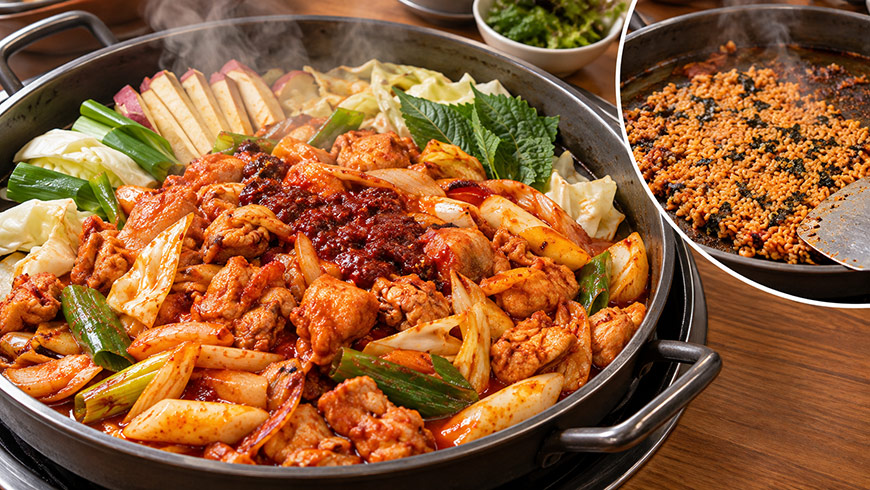
Dakgalbi is made with chicken cooked in a spicy-sweet sauce, usually together with cabbage, sweet potato, onion and rice cakes on a large hot plate.
Interestingly, the Chuncheon dakgalbi we recognise today wasn’t always cooked this way.
An earlier version was charcoal-grilled chicken. As cooking methods changed, the dish developed into the large iron-plate version that became famous throughout Korea.
Today, you can still find both cheolpan dakgalbi (철판닭갈비) cooked on an iron plate and sutbul dakgalbi (숯불닭갈비) grilled over charcoal.
⭐ Don’t finish yet!
After eating most of the chicken, there may still be one important step:
볶음밥!
Rice can be stir-fried directly in the remaining sauce with ingredients such as seaweed and vegetables.
For many dakgalbi fans, the fried rice at the end is almost as important as the chicken itself. 😋
Travelling around Korea? These are only some of the country’s regional specialities. You can discover more local dishes from different parts of Korea in VISITKOREA’s guide to regional Korean food.
Chodang Soft Tofu
Not every famous Korean dish needs to be spicy.
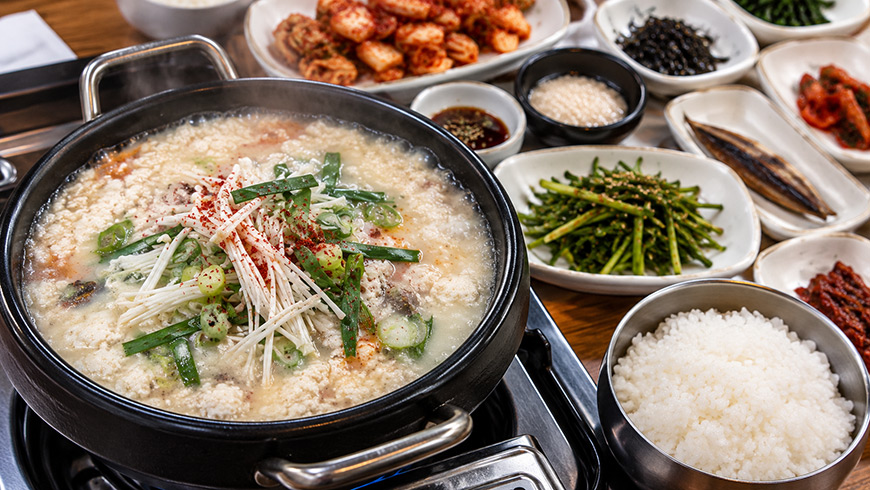
Gangneung, on Korea’s east coast, is famous for Chodang sundubu, a wonderfully soft tofu with a delicate, nutty flavour.
This is quite different from the red, spicy 순두부찌개 (sundubu jjigae), or spicy soft tofu stew, that many people associate with Korean sundubu.
Chodang sundubu lets the flavour and texture of the freshly made tofu take centre stage.
So if spicy Korean food isn’t your thing, this is one regional speciality worth remembering.
🌊 Food and place
This is also a lovely example of how regional Korean food can reflect its surroundings.
Gangneung’s Chodang area became so closely associated with tofu that today you’ll find an entire Chodang Sundubu Village filled with restaurants specialising in tofu dishes.
Andong Braised Chicken
You might assume Andong jjimdak is an ancient traditional dish.
Surprisingly, it’s relatively modern.
The dish is linked to Andong Old Market, where chicken sellers began serving braised chicken dishes around the 1980s.
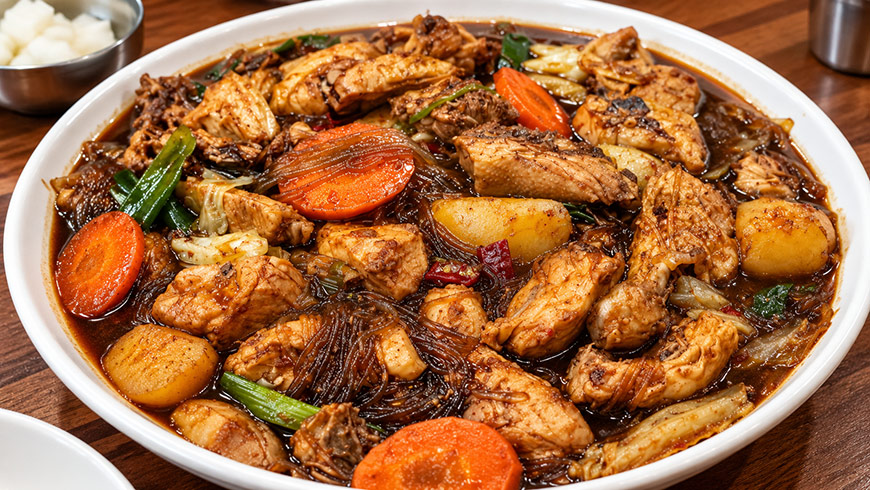
Chicken is simmered in a savoury-sweet soy sauce with ingredients such as potatoes, carrots, chilli peppers and glass noodles.
The generous portions also helped make it popular with students and young people looking for an affordable meal to share.
🥢 Don’t ignore the glass noodles!
The 당면 (dangmyeon) soak up the rich soy-based sauce while everything cooks.
For some people, they are one of the best parts of jjimdak!
Jeonju Bibimbap (Mixed Rice)
Bibimbap is available almost everywhere in Korea.
But one city has become especially famous for it:
Jeonju.
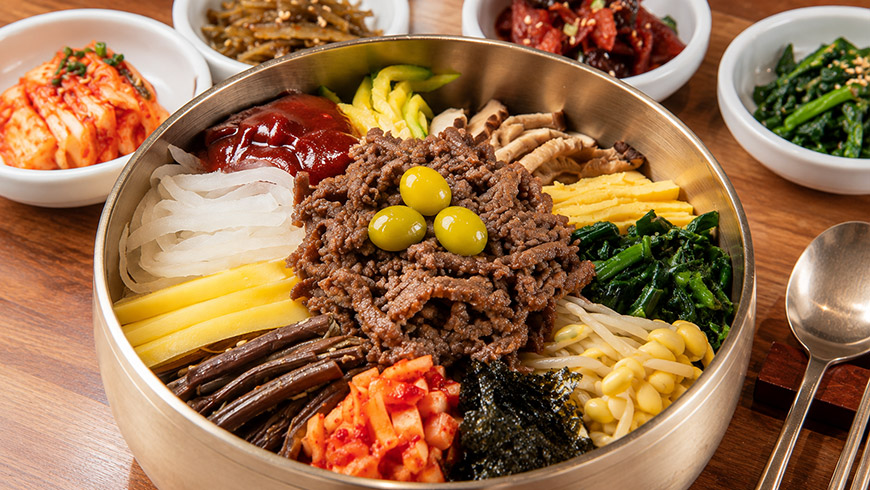
A bowl of Jeonju bibimbap brings together rice with colourful ingredients such as bean sprouts, spinach, bracken, egg and beef, usually mixed with gochujang and sesame oil.
There are several stories about where Jeonju bibimbap originally came from, including connections to royal cuisine and food prepared for ancestral rites. Its exact origin isn’t certain.
What is certain is that Jeonju built a strong reputation for bibimbap, and by the second half of the 20th century, the city’s version had become known throughout Korea.
🥄 Remember the name!
The Korean word actually tells you what to do:
비비다 (bibida) = to mix
밥 (bap) = rice
So don’t carefully eat each topping separately.
Mix it!
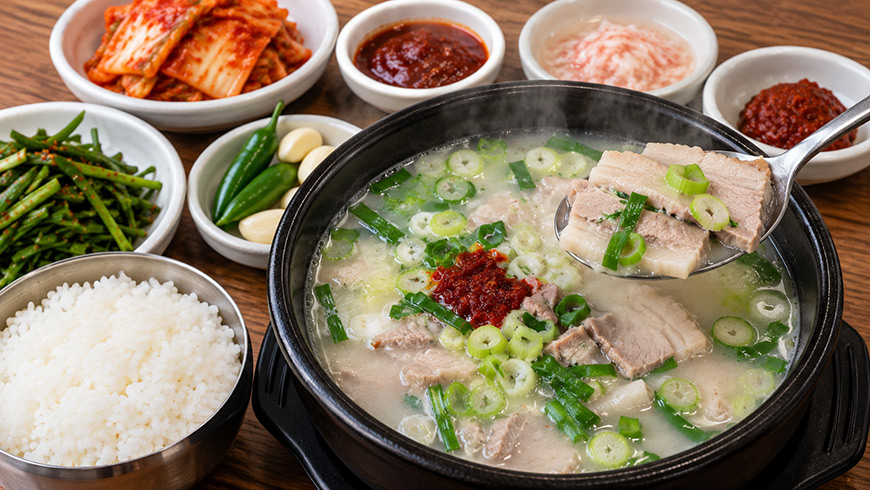
Pork and Rice Soup
Busan has plenty of seafood, but one of the city’s most beloved comfort foods is actually pork.
돼지국밥
The name is wonderfully straightforward:
돼지 (dwaeji) = pig / pork
국 (guk) = soup
밥 (bap) = rice
Slices of pork are served in a rich broth, with rice either added to the soup or served alongside it.
What makes eating it fun is that you can adjust the bowl to your own taste.
Add 부추 (chives), salted shrimp or seasoning depending on how strong you like the flavour.
🍚 A very Busan meal
Around Seomyeon, you’ll even find streets lined with restaurants specialising in dwaejigukbap.
It’s warm, filling and uncomplicated, exactly the kind of meal you might want after a long day exploring Busan.
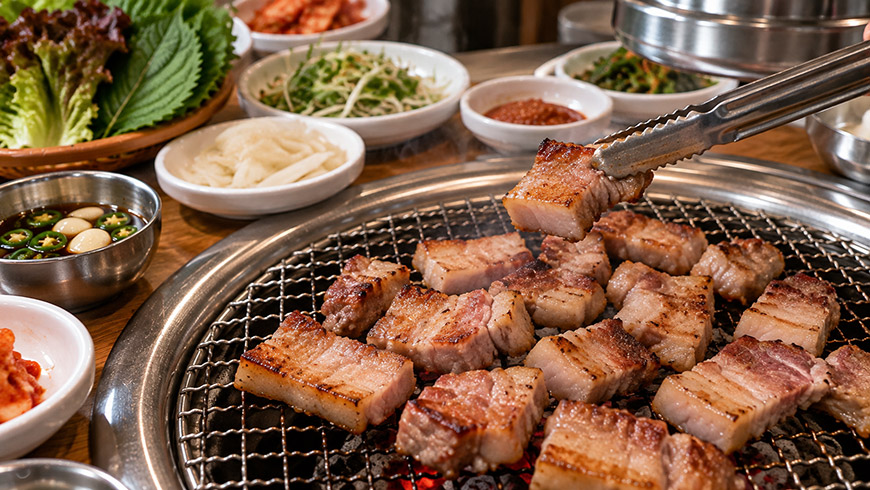
Jeju Black Pork
We’re ending our Korean food trip on Jeju Island.
And yes, Jeju is surrounded by the sea.
But one of its most famous foods is:
흑돼지, black pork. 🐷
Black pigs have long been part of Jeju’s distinctive food culture, and pork was traditionally important for community celebrations and special occasions.
Today, the most popular way to enjoy Jeju black pork is grilled in thick slices.
It is particularly known for its firm, chewy texture and rich flavour.
🥩 Eat it the Jeju way
When your pork is ready, you may notice a small dish of bubbling sauce beside the grill.
That’s 멜젓 (meljeot), a fermented anchovy sauce traditionally paired with Jeju black pork.
Dip a piece of grilled black pork into it for a salty, savoury kick.
It might become your favourite Korean BBQ combination!
One Country, Many Korean Foods
From black bean noodles in Incheon to pork soup in Busan and black pork on Jeju Island, Korean food changes as you travel around the country.
And behind many dishes is a little piece of Korean life:
Incheon tells a story of its port and cultural exchange.
Uijeongbu’s budaejjigae reflects a difficult period of modern Korean history.
Andong’s jjimdak grew from a local market.
And dishes from Jeonju, Chuncheon, Busan and Jeju have become so closely connected with their hometowns that eating them is now part of visiting those places.
Food is one of the easiest and most enjoyable ways to discover Korean culture.
If you’d like to explore another essential part of the Korean dining table, read our ONLYOU guide to kimchi and why it is so important in Korean food culture.
And there’s a little language learning hidden in it too.
Once you know words such as:
밥 = rice / meal
국 = soup
돼지 = pig / pork
닭 = chicken
갈비 = ribs
찌개 = stew
Korean menu names suddenly start making a lot more sense!
Learn Korean Through Language and Culture
Learning Korean becomes more interesting when the language connects with the culture behind it.
At ONLYOU Korean Language School, our Korean lessons help learners build practical language skills while also discovering more about Korea, its people and culture along the way.
If you’re looking to learn Korean in Singapore, you can explore our Korean classes in Singapore, designed to help learners progress step by step from Hangul and everyday expressions to communicating with greater confidence in Korean.
Ready to start learning Korean?
Explore our Korean classes in Singapore and find a suitable level to begin or continue your Korean learning journey.