

The Significance of Korean Ancestral Rites and Memorial Services
The practice of ancestral rites in South Korea is important to Korean society due to numerous reasons. Find out more about these time-honoured traditions here.
Source: Reach the World
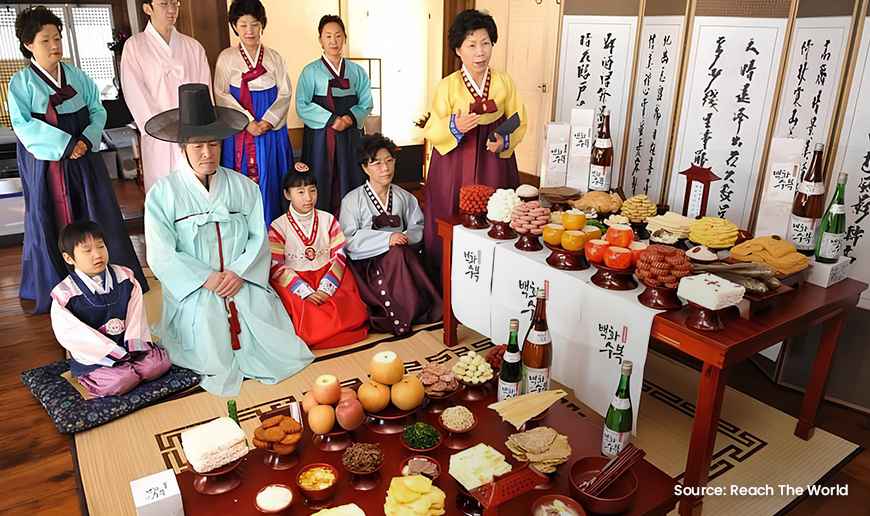
The practice of ancestral rites and memorial services in South Korea, known as 제사 (je-sa), is deeply rooted in Confucian philosophy and traditional Korean belief systems. These ceremonies require the arrangement of altars with ancestral tablets accompanied by offerings of food and drinks, as well as family members to perform ritual bows and prayers. Learn more about the significance of these time-honoured traditions below.
Learn More: Understanding Confucianism’s Impact on Korean Society Today
Types of 제사 (je-sa)
- 차례 (cha-lye): Ceremonies that are usually held during holidays such as Korean Thanksgiving (추석 chu-seok) or Lunar New Year (설날 seol-nal).
- 기제사 (gi-je-sa): Rites conducted annually on the death anniversary.
- 시제 (si-je): Rituals performed to honour ancestors every season.
- 묘제 (myo-je): Ceremonies held during the funeral, at the grave.
What Do the Ancestral Rites Mean to Korean Society?
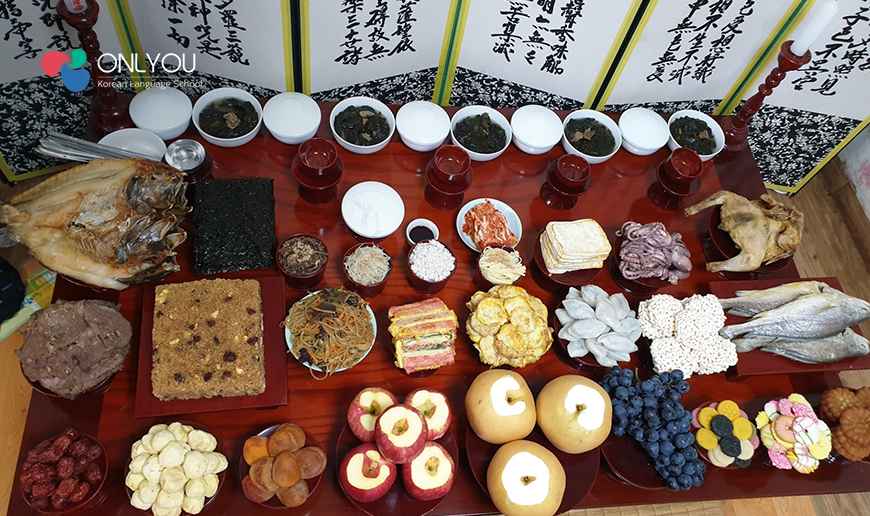
The significance of Korean ancestral rites and memorial services goes far beyond the surface of ritualistic practices. It is a living expression of values such as filial piety and family cohesion, and it serves as anchors to remind South Koreans of the enduring importance of their cultural heritage.
If you’re interested in learning more about Korean culture, start off by picking up the Korean language at a Korean language school. ONLYOU Korean offers lessons in Singapore suitable for all learning levels. Find out more about our classes here.